
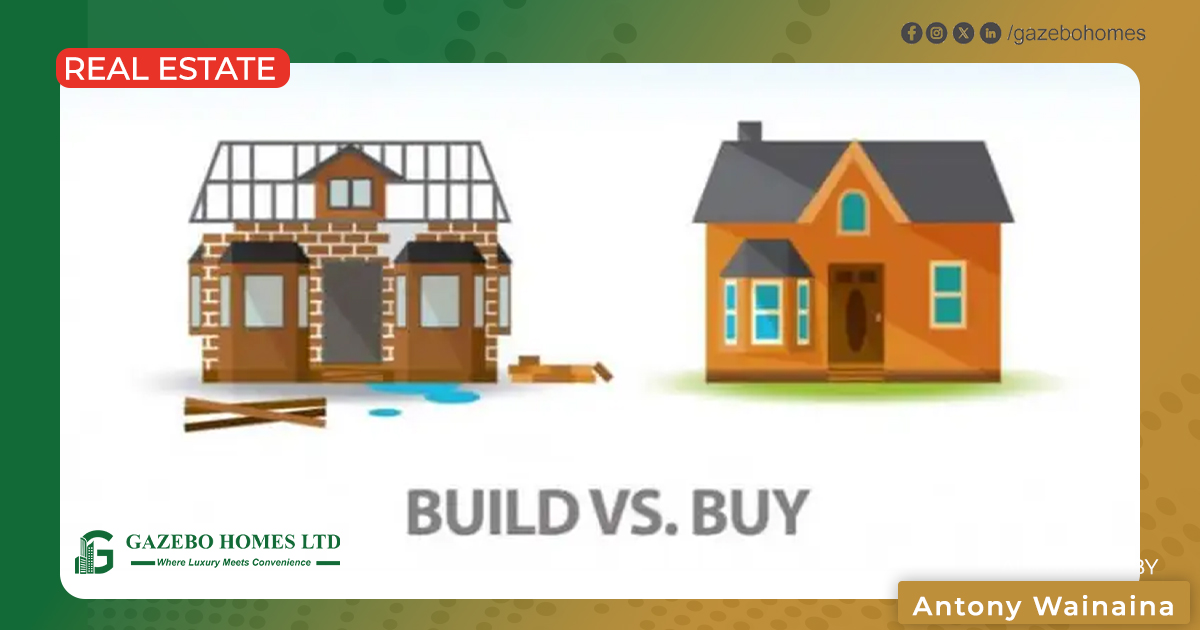
Building vs Buying a House in Kenya – Costs, Risks & Turnkey Solutions (2026)
Why Many Kenyans Underestimate the True Cost of Building
Building a house in Kenya is often perceived as cheaper and more flexible than buying a completed home. While this may hold in controlled circumstances, hidden costs, execution risks, and long timelines often surprise homeowners.
Table of Contents
This guide explains:
- The real cost of building in Kenya
- Hidden construction expenses
- Why projects stall
- Build vs buy comparisons
- When buying from a professional developer makes more sense
It also shows how Gazebo Homes Ltd mitigates common construction risks through turnkey developments, providing low-risk ownership for buyers.
Is it cheaper to build or buy a house in Kenya?
Building can be cheaper if well-managed, but buying a completed home provides cost certainty, faster occupation, and lower risk.
1. The Real Cost of Building a House in Kenya
Construction costs vary depending on design, location, and finishes.
How much does it cost to build a house in Kenya?
Typical construction costs range KES 30,000 – 120,000 per square meter, excluding land and financing.
| Housing Type | Cost per m² (KES) |
|---|---|
| Low-cost housing | 30,000 – 40,000 |
| Mid-range housing | 45,000 – 65,000 |
| Upper-mid housing | 65,000 – 85,000 |
| High-end housing | 90,000 – 120,000+ |
Excludes land, approvals, and professional fees.
2. Hidden Construction Costs Most Homeowners Ignore
What hidden costs should builders expect in Kenya?
Common overlooked expenses:
- Architectural and engineering fees
- County approvals & NEMA assessments
- Utility connections (water, electricity, sewer)
- Design changes (variations)
- Security and supervision costs
These can add 10–20% to the initial budget.
3. Why Many House Construction Projects Stall in Kenya
Why do many house construction projects stall in Kenya?
Stalled projects often result from:
- Underestimating total cost
- Paying contractors upfront
- Poor project management
- Inconsistent funding
Restarting stalled projects can cost more than finishing correctly the first time.
4. Build vs Buy: A Practical Comparison
Should I build or buy a house in Kenya?
| Factor | Building | Buying |
|---|---|---|
| Cost certainty | Low | High |
| Time to occupy | Long | Immediate |
| Risk exposure | High | Low |
| Customisation | High | Limited |
| Financing ease | Moderate | Easier |
Build suits buyers seeking customisation and long-term projects, while buy suits those prioritizing speed, cost certainty, and lower execution risk.
5. When Building Makes Sense
Building is suitable when:
- You already own land
- You have stable long-term funding
- You can supervise or hire professionals
- You are not under time pressure
Without these conditions, building risk increases significantly.
6. When Buying Makes More Sense
Buying is ideal when:
- You need immediate occupation
- You rely on mortgage financing
- You prefer predictable costs
- You want professional project delivery
Turnkey developments eliminate many construction risks.
7. Why Buyers Choose Turnkey Developments
Professionally developed homes offer:
- Clear titles & approved designs
- Fixed pricing & structured payment plans
- Predictable completion timelines
Developers like Gazebo Homes Ltd absorb construction risk for buyers.
8. How Gazebo Homes Reduces Buyer Risk
Gazebo Homes focuses on:
- Pre-approved architectural designs
- Quality-controlled construction
- Transparent pricing and documentation
- Long-term asset value
Ideal for: first-time buyers, diaspora investors, and low-risk ownership seekers.
9. Cost Control Lessons from Failed Builds
Lessons include:
- Always use Bills of Quantities (BOQs)
- Avoid mid-project design changes
- Separate construction and supervision roles
- Maintain budget contingency funds
Buying completed homes avoids most of these pitfalls.
10. Long-Term Financial Perspective
A slightly higher purchase price can:
- Save years of construction delays
- Prevent cost overruns
- Enable earlier rental income
- Reduce emotional and financial stress
Long-term value often outweighs short-term savings.
FAQs
1. Is it cheaper to build a house yourself in Kenya?
It can be, but only with strong cost control, supervision, and stable funding.
2. Why do construction budgets often increase?
Hidden costs, design changes, material price fluctuations, and poor supervision drive budget increases.
3. Is buying safer than building in Kenya?
Yes. Buying from reputable developers provides cost certainty and reduced execution risk.
4. Can diaspora buyers build houses remotely?
Yes, but remote construction carries higher risk without professional project management.
5. Why do buyers prefer turnkey developments?
Turnkey homes offer predictability, legal clarity, and faster occupancy, reducing financial and emotional risk.
All Categories
Recent Posts

Land Selling Companies in Kenya

How Diaspora Investors Can Safely Buy Property in Kenya