
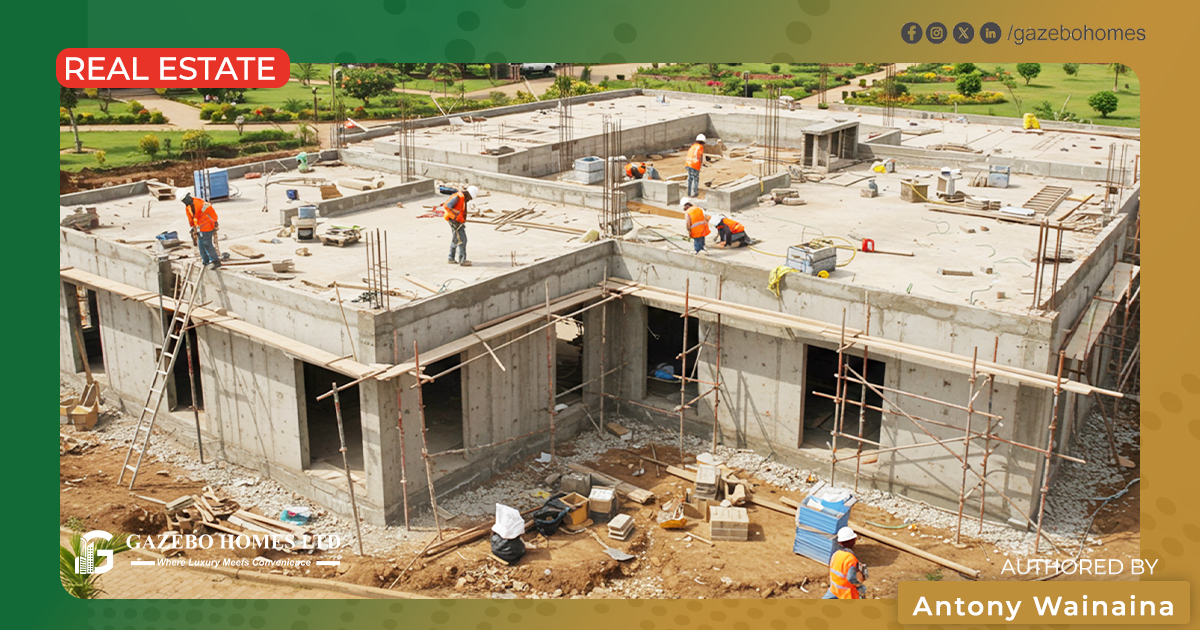
Cost of Building a House in Kenya: Process, Companies & Technologies (2026)
Introduction
Owning a home in Kenya remains a key milestone for families and investors. In 2026, the construction sector has evolved with modern building technologies, turnkey solutions, and professional contractors, making it easier to build efficiently and predictably.
Table of Contents
Whether you are building a bungalow in Juja, a townhouse in Ruiru, or a luxury home in Nairobi suburbs, understanding costs, processes, and reputable construction companies is essential to avoid delays, cost overruns, and poor workmanship.
Why Building Your Own Home Makes Sense
- Customization: Design a home that matches your lifestyle and family needs
- Long-term savings: Eliminate rent and benefit from capital appreciation
- Quality control: Select durable materials and finishes
- Investment potential: Build for rental income or resale
Types of Home Construction in Kenya
1. Self-Managed Construction
The owner directly manages labor, materials, and timelines.
Pros: Lower costs, full control
Cons: Time-intensive, requires technical knowledge
2. Contractor-Managed Construction
A licensed contractor handles construction and supervision.
Pros: Professional execution, reduced stress
Cons: Higher cost than self-managed
3. Turnkey Projects
A developer delivers a complete house on your land at a fixed price.
Pros: Minimal involvement, guaranteed timelines, fixed budget
Cons: Higher upfront cost
Step-by-Step Home Building Process in Kenya
Step 1: Architectural & Structural Design
- Hire a licensed architect
- Structural engineer prepares drawings and Bills of Quantities (BOQ)
- Designs must comply with county regulations and NCA requirements
Step 2: County Approvals & Permits
- Obtain building permits from the county government
- Comply with zoning regulations
- Register the project with the National Construction Authority (NCA)
Step 3: Budgeting & Cost Planning (2026 Estimates)
| Finish Level | Cost per sqm |
|---|---|
| Standard finishes | KES 35,000 – 45,000 |
| Mid-range finishes | KES 50,000 – 65,000 |
| High-end finishes | KES 75,000+ |
Include 10–15% contingency for unexpected costs.
Step 4: Groundworks & Foundation
- Site clearing, excavation, leveling
- Foundation types:
- Strip footing
- Raft foundation
- Reinforced concrete
Step 5: Walls, Roofing & Slabs
- Walls: Machine-cut stone, bricks, prefabricated panels
- Roofing: Iron sheets, clay tiles, eco-metal sheets
- Slabs: Reinforced concrete, waffle slab, beam & block
Step 6: Plumbing, Electrical & Finishes
- Plumbing must comply with county and water authority codes
- Electrical installations follow KEBS and KPLC standards
- Finishes include:
- Flooring and tiling
- Painting
- Kitchen cabinetry
- Doors and windows
Step 7: Final Inspection & Handover
- County inspection and compliance approval
- Issuance of completion certificates
- Formal handover to the owner
Modern Construction Technologies in Kenya (2026)
- Concrete panel systems: Fast, fire-resistant, durable
- Prefabricated homes: Reduce construction time by up to 50%
- Green building materials: Solar integration, energy efficiency
- Modular construction: Flexible designs, minimal waste
Choosing the Right Construction Company
Key Evaluation Criteria
- Proven portfolio and references
- Transparent contracts with timelines
- Valid NCA registration and professional licenses
- Warranty and post-construction support
Top Construction Companies in Kenya (2026)
- Finsco Africa: Residential and commercial turnkey projects
- Tulia Real Estate: Custom design-build solutions
- Gazebo Homes: Modular and ready-to-build housing
- Maploti-verified partners: Ideal for diaspora investors
Construction Cost Breakdown (Typical House – 2026)
| Item | Standard | Mid-range | High-end |
|---|---|---|---|
| Foundation | KES 300k | KES 500k | KES 800k |
| Walls | KES 500k | KES 900k | KES 1.5M |
| Roofing | KES 250k | KES 500k | KES 900k |
| Plumbing | KES 150k | KES 300k | KES 500k |
| Electrical | KES 150k | KES 300k | KES 500k |
| Finishes | KES 500k | KES 1.5M | KES 3M |
| Estimated Total | KES 2.0M | KES 4.0M | KES 6.0M+ |
Actual costs vary by location, materials, and contractor.
Financing Your Home Construction
- Bank construction loans: KCB, Equity, Co-op Bank
- Developer instalments: Flexible payment plans
- Joint ventures: Share costs and profits
- SACCO loans: Mwalimu, Nyeri, and other SACCOs
Location Considerations for Home Construction
Urban Areas
- Nairobi suburbs: Runda, Syokimau, Kitengela
- Pros: Infrastructure, high rental demand
- Cons: Higher land costs
Satellite Towns
- Juja, Ruiru, Thika outskirts
- Pros: Affordable plots, high appreciation
- Cons: Longer commute
Holiday Homes
- Naivasha, Diani, Kisumu
- Pros: Tourism rental income
- Cons: Seasonal demand
Legal & Compliance Checklist
- Verify title deed ownership
- Ensure contractor NCA registration
- Obtain building permits and approvals
- Adhere to county building regulations
Case Studies – Successful Projects (2026)
Juja Bungalow
- 3-bedroom prefabricated bungalow
- Cost: KES 4.2M
- Timeline: 6 months
- Outcome: High rental demand
Kitengela Townhouses
- 5-unit contractor-managed project
- Cost: KES 15M
- Timeline: 9 months
- ROI: 12%
Naivasha Eco-Lodge
- Turnkey project by Gazebo Homes
- Cost: KES 8M
- Timeline: 10 months
Common Mistakes to Avoid
- Hiring unlicensed contractors
- Skipping permits and approvals
- Underestimating budget by 20–30%
- Using poor-quality materials
- Ignoring professional surveying
Frequently Asked Questions
How long does it take to build a house in Kenya?
Typically 6–12 months, depending on size, technology, and contractor efficiency.
What is the cost of building a house in Kenya in 2026?
KES 35,000–75,000 per sqm, depending on finishes.
Can I build without a contractor?
Yes, but it requires strong project management and technical supervision.
Conclusion
Building a home in Kenya in 2026 offers significant opportunities for homeownership, rental income, and long-term wealth creation. Success depends on proper planning, budgeting, compliance, and choosing the right construction partners. When managed correctly, modern construction methods and professional companies can deliver quality homes on time and within budget.
All Categories
Recent Posts

Land Selling Companies in Kenya

How Diaspora Investors Can Safely Buy Property in Kenya